
At a foot selection appointment, you may be offered two carbon models and wonder which will work better with your steps. An important question is: ‘If the foot feels too soft or too resistant after trying it, what exactly can the specialist adjust?’ The answer is not the same for every carbon foot. The type of adjustable component is an important difference to understand before buying.
The specific advantage of a foot with replaceable bumpers is a component with selectable stiffness that can help match the foot's response to the individual. At TGEC, both Arian and Arian LT provide this option: the specialist can select a compatible bumper based on your weight and actual activity, then reassess that choice during use if needed.
How does carbon flex differ from bumper selection?
The carbon section of a foot deforms under load and releases some of the energy put into it as it returns. The shape and arrangement of its blades affect the assembly's behaviour. For example, some carbon foot families use multiple blades in different arrangements. This is a feature of the foot's structure. Seeing a flexible blade alone does not tell you which adjustments are available after fitting. [1]
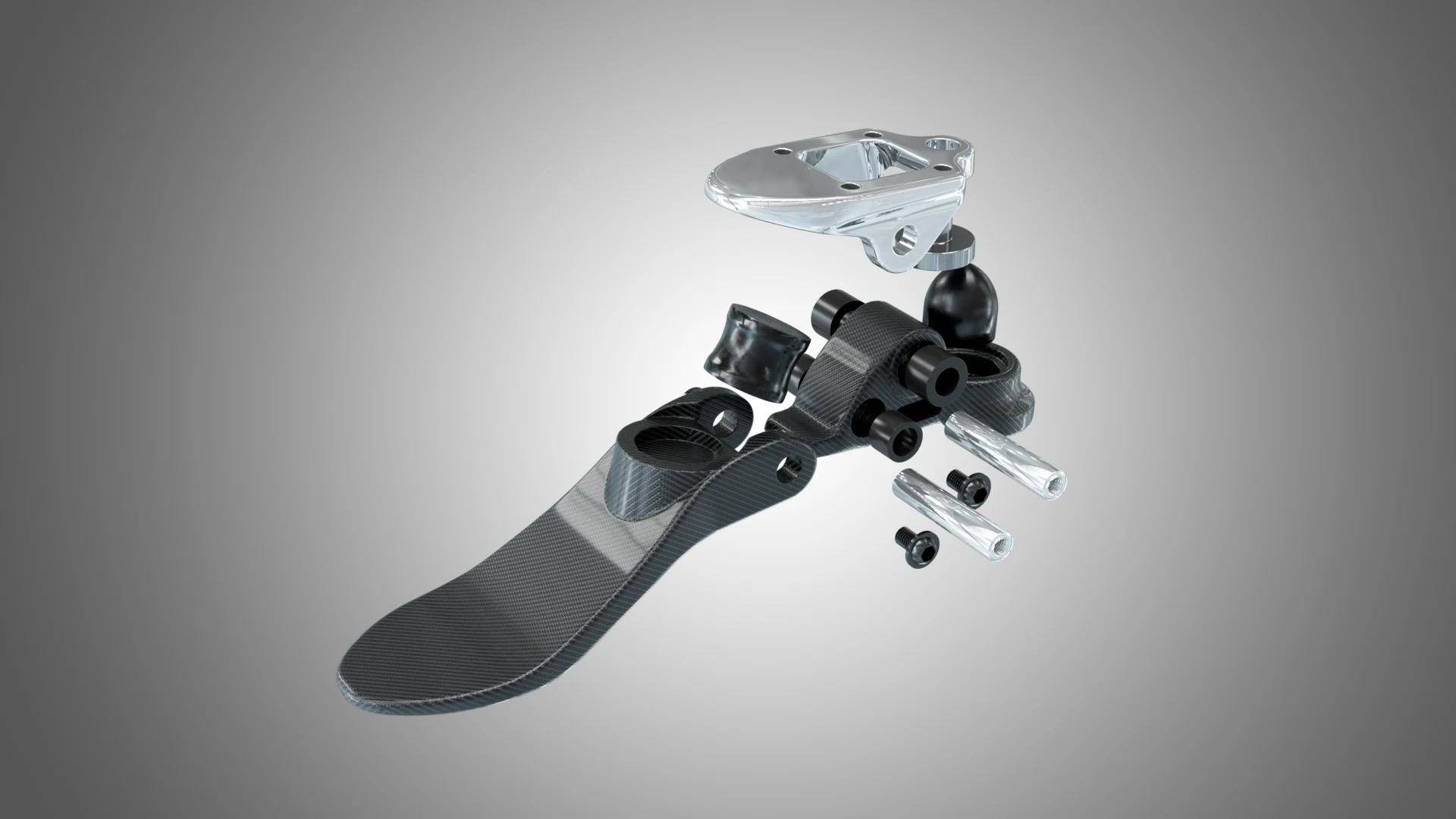
A bumper is another flexible component used in some prosthetic feet, affecting the assembly's resistance to movement. In bumper-based designs, compression of this component forms part of the foot's function. [2] When replaceable bumpers are offered in different stiffnesses, the specialist has a specific way to adapt the response in addition to selecting the model. In Arian and Arian LT, bumpers and the carbon structure work together.
Comparing three ways to change a prosthetic foot's response
Selecting a bumper with suitable stiffness
With Arian and Arian LT, the specialist can select a compatible component from the available bumper stiffness ranges to suit your specifications. If reassessment shows that the response of this section needs to change, it can be replaced with a permitted option. The benefit is access to a defined component for adaptation: the main carbon structure does not have to be discarded for every adjustment need.
Selecting a heel wedge in some carbon feet
Some feet use a component called a heel wedge to change the heel response. For example, the manufacturer of Taleo offers wedges in three stiffnesses. A clinician can use them to alter the response at heel strike and during heel contact as weight bearing continues. [3] This is also an adjustment method, but it is important to understand which part of movement it changes. A model's heel wedge and bumper should not be treated as equivalent without assessment.
Adjusting resistance in a hydraulic ankle
In some other designs, movement resistance is adjusted through a hydraulic mechanism. Taleo Adapt, for example, has separate adjustment valves for resistance to upward and downward ankle movement. [4] This differs from replacing a bumper. A foot without replaceable bumpers may therefore offer other adjustments; comparisons should be based on the features of the particular model.
These methods are not necessarily separate categories. A foot may combine several mechanisms. When comparing models, ask which component changes, which part of the step it affects, and whether the feature is useful for your needs. Having more adjustments does not by itself determine the right choice.
What does this difference offer in Arian and Arian LT?
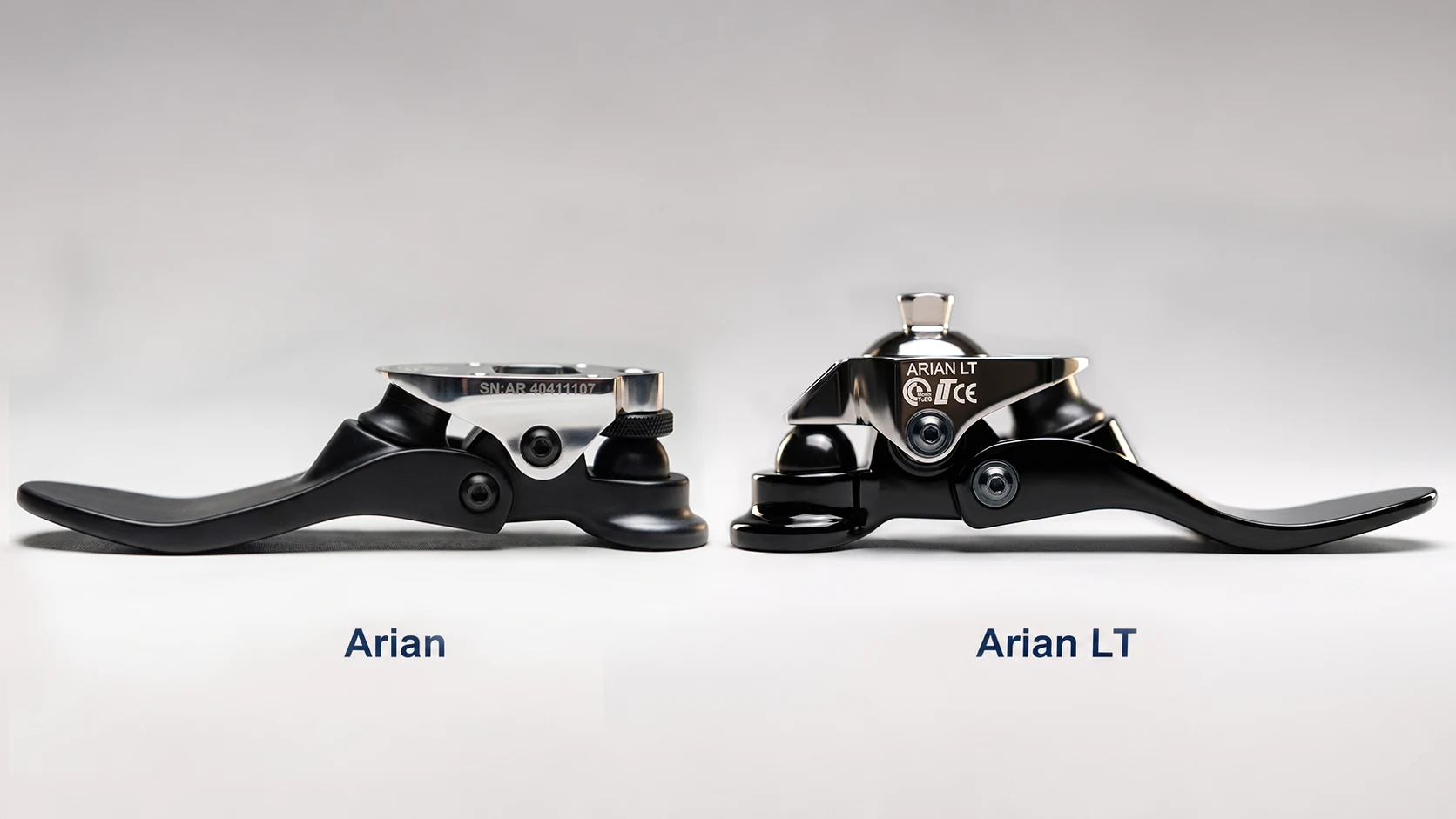
At TGEC, both Arian and Arian LT combine a carbon multiaxial structure with replaceable bumpers in different stiffness ranges. This gives the specialist bumper stiffness selection as a defined way to adapt the foot's response. A bumper is more than a component to consider when something wears out: selecting appropriate stiffness is part of matching the foot to the individual from the outset.
This design can retain its value during continued use. If your adjustment needs change while the model remains suitable and sound, the specialist can reassess the bumper options. There is another way to change the response of this section besides selecting an entirely new foot.
Alongside bumper replacement, Arian offers rear-bumper pressure adjustment and a range of pyramid connection options. Arian LT does not provide these two specific Arian features, but it also allows selection and replacement of a bumper with suitable stiffness. Alignment of the whole prosthesis is a separate matter and is assessed professionally in both models.
Replacing a bumper does not increase the maximum permitted body weight or automatically change the foot's technical category. The specialist must first confirm that the model suits your weight, activity and prosthetic assembly, then use the adjustment options available within that model.
Assess adjustment results in your everyday steps
Describing your experience matters as much as understanding the components. Your prosthetist considers your feedback alongside observation of your walking. Research on foot stiffness preferences also illustrates the importance of this discussion: what a user prefers does not always match the specialist's judgement. [5]
At the assessment, describe the situation precisely instead of making a general request such as ‘make it softer’:
- How does it feel when your heel meets the ground, and in which shoes does this happen?
- Which part of the step is difficult as your body moves over the prosthetic foot?
- What differences do you notice on your usual routes at home or work, particularly on sloping or uneven ground?
These descriptions help identify adjustment needs; the specialist selects the bumper and adjustment. A stiffer bumper or reporting a higher activity level does not mean receiving a better foot. The aim is a response that suits you. Discomfort when walking is not always caused by the bumper: the socket, shoes or alignment of the whole prosthesis may also need assessment.
Consider adjustment features together with service support
Bumper selection has value during continued use when compatible parts and a service route are available. At TGEC, we guarantee Arian after-sales service and component supply under the company's terms. When choosing a foot, obtain the coverage details, component and adjustment charges, and quoted supply time so you understand how this feature is supported after purchase.
To compare two models, ask both providers which component can be changed, who adjusts it, and under which terms ongoing service is available. Request current prices for the foot and compatible components separately. Arian's economic value article discusses purchase and servicing costs in more detail; the focus here is the type of adaptation feature you are buying with the foot.
If being able to reassess the foot's response matters to you when choosing a carbon foot, consider Arian and Arian LT and their selectable bumper options. Ask your specialist to explain this benefit in relation to your actual needs. Understanding these practical differences is the starting point for an informed choice.
Frequently asked questions
Is a carbon foot without bumpers necessarily unadjustable?
No. Some models have heel wedges, hydraulic adjustments or other features. Check the type and range of adjustment available in the particular model. A replaceable bumper provides a specific way to select component stiffness.
Do a bumper and a carbon blade do the same job?
Both contribute to the assembly's mechanical response, but they are different components with different mechanisms. Blade flex comes from the carbon structure. Bumper selection offers a way to change the response of the relevant section within the foot's design limits.
Can Arian LT bumper stiffness also be selected?
Yes. Both Arian and Arian LT have bumpers in different stiffness ranges, and compatible components can be replaced. Rear-bumper pressure adjustment is a separate feature offered in Arian and is not provided in Arian LT.
Should I replace the bumper myself when my activity changes?
No. Tell your prosthetist about changes in activity or weight so the model's suitability and adjustment can be reassessed. This may lead to a component change, or it may show that another action is needed. Do not undo or adjust components and screws yourself.
Foot selection and adjustment require an individual professional assessment. An explanation of design features does not replace observation of walking and assessment of the entire prosthesis.