

At a glance: A prosthetic foot replaces the missing foot and helps support standing and walking. Carbon describes its structural material; multiaxial describes its directions of movement. Selection depends on your daily activities, the whole prosthesis, and an individual assessment.
For someone preparing to walk with a prosthesis, questions often begin with everyday activities: Will I be able to leave home to go shopping? How will I manage slopes or uneven pavements on my way to work? What will help me stand comfortably at home for longer periods? The prosthetic foot is one of the components that helps meet these needs. Understanding how it works can help you explain your needs more clearly to your specialist and make sense of the specifications of different models.
What role does the prosthetic foot play in walking?
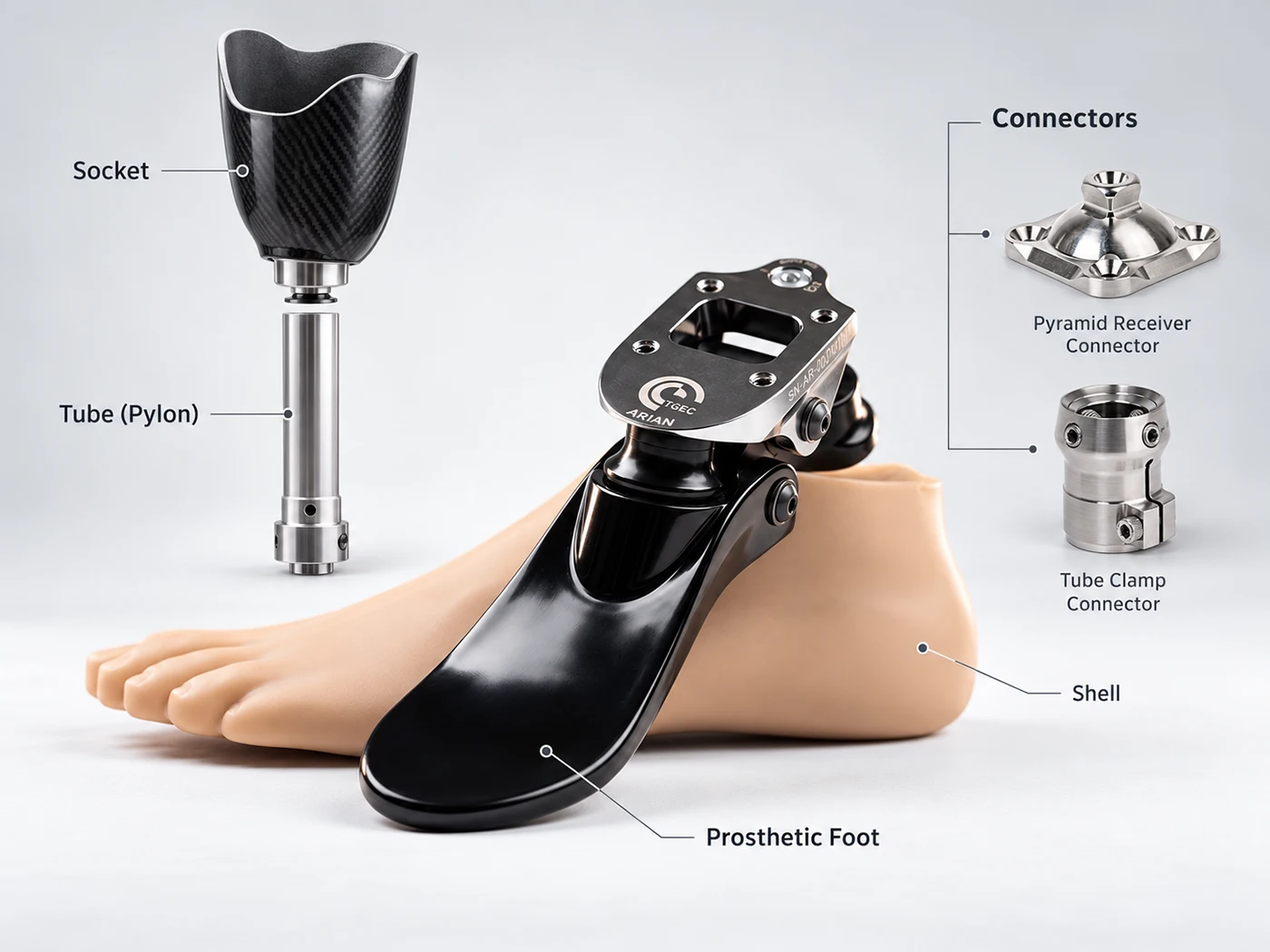
In prosthetics, the term "foot" usually refers to the assembly at the lower end of the prosthesis that replaces the missing foot, rather than just the toes. This component supports your body when you stand and helps transfer your weight and move your body over the foot as you take a step. It may be concealed beneath a cover shaped like a natural foot, but its behavior depends on its internal structure and how it connects to the prosthesis. [1]
The foot works alongside other components. The socket is the part that holds the residual limb; connectors and a tube link the components together. An above-knee prosthesis also includes a prosthetic knee joint. The socket's size and shape, the alignment of the components, and gait training all contribute to your experience of using the prosthesis. If you have difficulty walking, your specialist therefore needs to assess the whole system. [2]
To begin the selection process, describe your everyday life. Do you mostly walk indoors or outdoors? Are your routes level or sloping? How long do you spend standing, and which activities would you like to return to? Bringing your usual shoes and a few real examples of your daily routes can make the discussion more specific. A prosthetist – a specialist who makes and adjusts prostheses – considers this information alongside your physical condition, amputation level, weight, and mobility. Age alone does not determine the type of foot you need. [3]
What does "carbon prosthetic foot" mean?
"Carbon" refers to the material used in part of the foot's structure. These feet use carbon fibers combined with polymer materials. This composite allows relatively lightweight, strong components to be made that flex to a designed extent under load. The component's shape and the arrangement of its layers also influence its behavior. [4]
In some designs, the flexible section deforms like a spring as weight is applied. As it returns to its original shape, it gives back some of that energy. This is what "energy storage and return" describes. The word "carbon" alone does not tell you how suitable a foot will be for you. Its stiffness, design, and compatibility with your abilities and walking pattern also matter. A carbon foot is not necessarily powered or electronically controlled. [4]
What does "multiaxial" mean and where can it help?

The surfaces we walk on are not always completely level. A pavement may slope slightly to one side, or a route may include an incline. "Multiaxial" means that the foot's design allows limited movement in more than one direction, such as up-and-down movement together with movement from side to side. This can help the foot accommodate uneven surfaces. The amount of movement and the way it occurs vary between models. [1]
"Carbon" and "multiaxial" describe two different features that can exist together: the first describes the structural material, while the second describes the directions of movement. A foot can be both carbon and multiaxial. When comparing models, ask your specialist to explain how these features apply to the routes you actually use.
Why do adjustment and servicing matter?
Once a model has been selected, it needs to be matched to your prosthesis and your body. Your specialist checks the alignment of the components and observes you walking before making the necessary adjustments. With some feet, movement characteristics can also be changed by selecting or adjusting specific components, in addition to adjusting the connection. These options must be used by a specialist and within the design limits of that particular model. [5]
You may see the word "bumper" in a product description. A bumper is a flexible component that affects resistance to movement in some designs. Being able to replace components of this kind is important for servicing the foot.
Before choosing a foot, ask how replacement components are supplied, who carries out servicing, and what it costs. Having replaceable components does not remove the need for periodic checks of the whole foot. [6]
What should you ask when choosing a prosthetic foot?
You do not need to know the names of every technology. A few practical questions can make the appointment more useful. Write down the answers so that you can compare your options:
- How does this model match my current abilities and the activities I want to do? Which of its features will be useful in my everyday life?
- Are this model's specifications compatible with my weight, foot size, and the space available in my prosthesis? What are its limitations?
- Which shoes can I wear with it? What should I consider when changing shoes or heel height?
- If I feel discomfort while walking, how will it be assessed and followed up? Can my walking be evaluated and the prosthesis adjusted again?
- How much do the foot, servicing, and replaceable components cost? What does the warranty cover, and where should I go for future service?
Changing the heel height of your shoes can affect prosthetic alignment and your sense of balance. Discuss new shoes with your prosthetist. Also explain which movement is difficult and exactly when the problem occurs. This feedback is as valuable as the technical specifications when choosing and adjusting the foot. [7]
A brief introduction to the Arian and LT feet
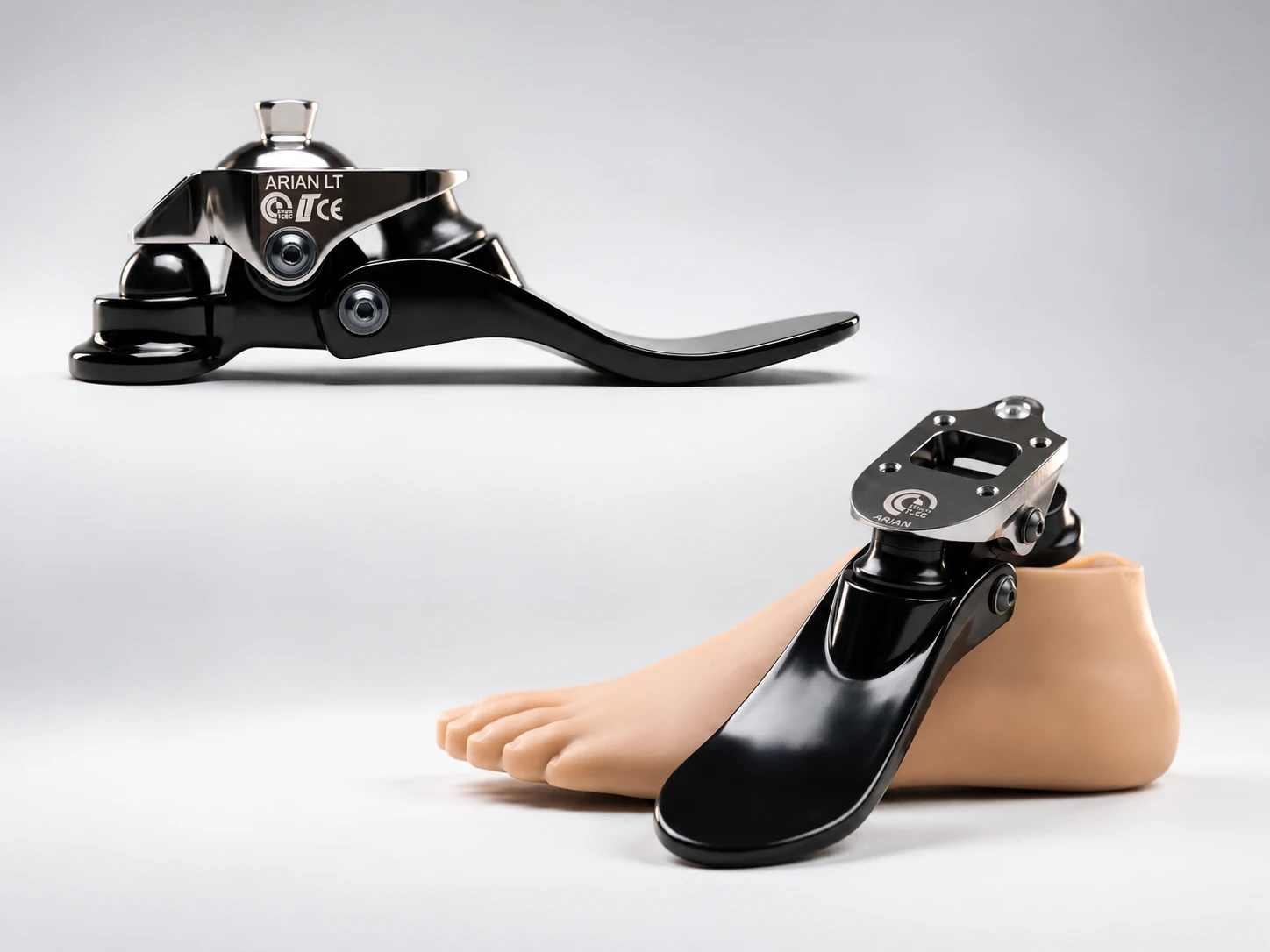
Arian and LT are two carbon multiaxial feet in TGEC's product range. According to the manufacturer's stated specifications, both have replaceable bumpers and can be serviced. Arian offers adjustment at the pyramid connection and adjustment of rear bumper pressure. LT does not offer Arian's rear bumper pressure adjustment or its range of pyramid connection options. In every size, LT is 70 grams lighter than the same-size Arian. You can discuss these differences with your prosthetist to understand their relevance to your prosthesis and your needs. The final choice should be based on an assessment of you and the whole prosthetic system.
Frequently asked questions
Is a more expensive prosthetic foot always a better choice?
Price alone does not show whether a foot is more suitable for you. Features are valuable when they match your abilities, activities, and living environment. Include servicing costs and access to replacement components in your comparison. [2]
Is foot selection the same for below-knee and above-knee amputations?
The principles of assessing your needs are similar, but an above-knee prosthesis also requires the foot to work appropriately with the prosthetic knee joint. Your specialist considers your amputation level, movement control, and the other components when assessing suitable options. [3]
Can I change my shoes when using a prosthesis?
This depends on the foot's design and the prosthetic alignment. Changes in heel height particularly need to be assessed. Show your specialist the shoes you want to wear so that they can determine which are compatible with your current setup. [7]
How long does a prosthetic foot last?
There is no single lifespan that applies to every foot and every person. How it is used, the condition of its components, and the manufacturer's instructions all matter. Ask your prosthetics provider about inspection intervals, warranty terms, and signs that servicing or replacement may be needed. [6]
What should I do if the foot makes a noise or my walking suddenly changes?
If you notice a new or unusual noise, looseness, a sudden change in how walking feels, or a wound, stop using the prosthesis and contact your prosthetics clinic. Do not adjust screws, connections, or bumpers yourself. [6]
This article is intended to introduce the prosthetic foot and help you prepare for a discussion with your specialist. Selecting and adjusting a prosthesis requires an individual assessment.