
You may still be getting around with your current prosthesis, but its foot may be worn, or you may want to consider another option for everyday activities. Does replacing the foot mean having a new socket and replacing every component? In some prostheses, the foot alone can be replaced, provided a prosthetist confirms that the remaining components are sound and suitable and that the new foot is compatible. This option is not the same for every prosthesis or foot model.
The first step is to establish what needs attention or what you want to improve. You can then compare the cost and expected outcome of servicing, replacing the foot, or making broader changes to the prosthesis. This guide helps you prepare specific questions for your prosthetist before buying a new foot.
First, clarify why you want to replace the foot
“My foot is old” and “I feel uncomfortable on my journey to work” describe different problems. In the first case, the component's condition and history of use need to be checked. In the second, the cause may be the foot, the socket, prosthetic alignment, or another factor. The socket is the part that holds your residual limb. A new foot alone will not resolve a socket that no longer fits properly. [1]
If you are considering a different model, talk about a specific task: your daily commute, changing walking speed, or standing at work, for example. Ask the specialist which feature of the proposed foot addresses that need. Foot selection depends on your weight, size, amputation level, activities, and goals; another person's positive experience is not enough to decide what suits you. [2]
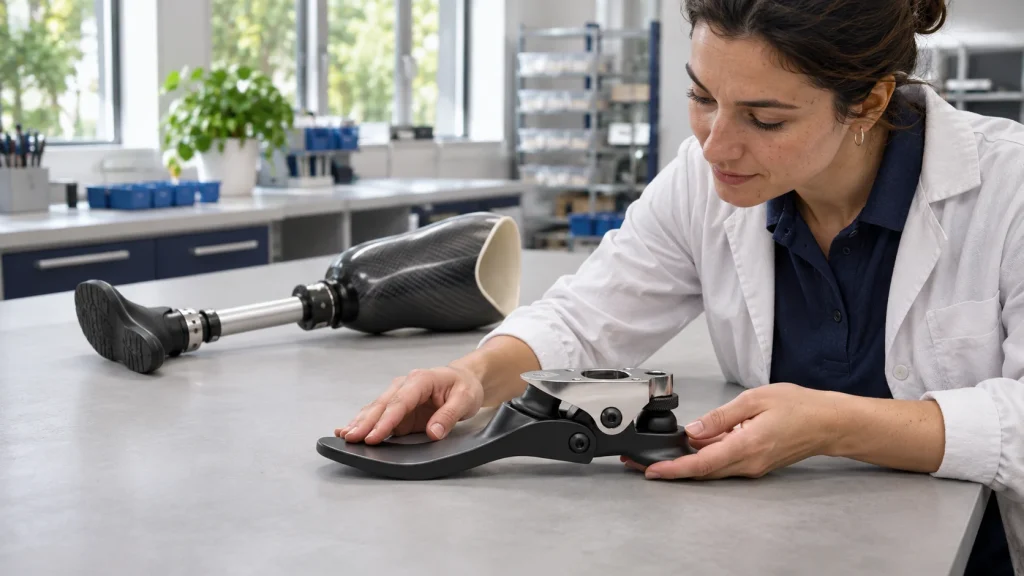
What does a prosthetist check before selecting a new foot?
Compatibility involves more than whether two connections appear to fit together. Your specialist needs to assess the foot, connectors, and other components together against the manufacturers' instructions. You can use the following questions; leave technical measurements and component selection to the specialist. [3]
- Are my socket and the components that will remain still sound and suitable for my current needs? If something needs modification or replacement, why?
- Is there enough space in my prosthesis for the proposed foot? Build height—the space the foot assembly needs for installation—varies between models. Connectors or intermediate components may also need to change.
- Are the size, permitted use limits, and component combination compatible? A matching foot size or a similar-looking connector does not establish this.
- If I have an above-knee prosthesis, how will the foot be assessed with the prosthetic knee and the whole assembly? The foot needs to be evaluated alongside the other components.
The assessment may show that a new foot can be fitted while suitable components are retained. Sometimes another component also needs to change, and in other cases broader modification or a new prosthesis may be more appropriate. Establish this before buying a component that may not suit your existing prosthesis.
Could servicing be an alternative to replacing the foot?
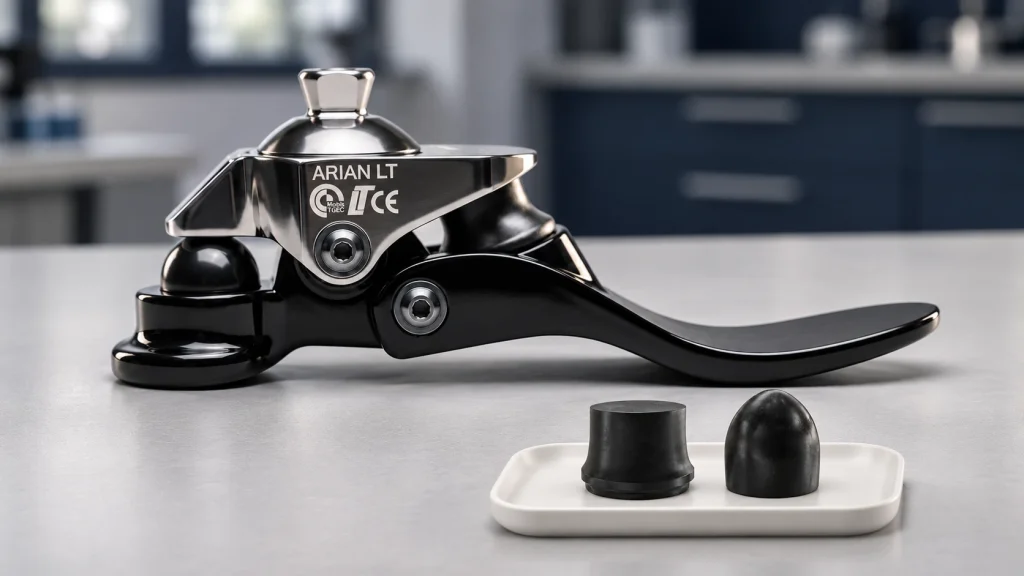
If the issue involves a replaceable component, servicing is one option to consider. At TGEC, we have designed Arian and Arian LT with replaceable bumpers. A bumper is a flexible component that contributes to how the foot responds to load and movement. If a specialist finds that replacing it is sufficient and that the other components are sound and suitable, the usable parts can be retained.
Both models offer bumpers in a range of stiffnesses. This helps the specialist match the bumper to your weight, actual activity, and the foot's technical category within the model's permitted limits, and reassess that choice as your needs change. A change in how walking feels does not necessarily mean you need a complete new foot.
Arian also allows rear bumper pressure adjustment in addition to bumper selection and replacement. Arian LT does not offer the same pressure adjustment, but its bumper is replaceable. A stiffer bumper or a higher stated activity level does not automatically mean a better foot. Changing the bumper does not increase the permitted weight limit or automatically change the foot's category.
Fitting the foot is not the end of the process
After replacement, the socket fit, prosthetic height and alignment, and your walking need to be reassessed. Alignment means the position of the components relative to one another. More than one appointment may be needed to achieve a suitable setup. Bring your usual shoes and explain which footwear you use at home and outdoors. [1]
Before taking the prosthesis home, describe how standing and stepping feel and which situations remain difficult. Ask the rehabilitation team how to continue using it and when to follow up. There is no single adjustment period that applies to everyone. Any additional training should be tailored to your needs. [4]
How to compare prosthetic foot replacement costs
Ask whether the quotation includes the foot itself, supplied accessories, any connectors needed, fitting, alignment, and follow-up appointments. If servicing your existing foot is also appropriate, ask for a separate estimate. A useful comparison makes clear which components are retained and which services are included in each option.
Ask TGEC or your prosthetist for current Arian and Arian LT prices based on the specified model and configuration. When considering an Iranian-made carbon foot, assess compatibility with your existing prosthesis and access to future servicing alongside the purchase price. Retaining sound, suitable components may avoid unnecessary replacement, but any cost difference needs to be established from an actual estimate for your case.
Ask separately about the warranty period, the foot's usable service life, and when its bumper may need replacement. The end of a warranty is not, on its own, a reason to discard a foot, and replacing one component does not give the whole assembly an unlimited life. Decisions depend on the current product terms and an assessment of that particular foot.
What to prepare before your appointment
If available, bring the foot's model name and product documents, service records, and your usual shoes. Write down two statements: “I want to replace my foot because…” and “The most important everyday activity I want to do is…”. Mention any change in your weight or activity, too. This information helps the specialist assess the suitability of the whole prosthesis. [5]
If there is visible damage, looseness, or a sudden concerning change in performance, stop using the prosthesis and contact your centre about a safe way to get around. Do not try a more difficult route to test the problem, and do not loosen screws or remove the bumper yourself. [5]
Frequently asked questions
Do I always need a new socket to fit a carbon prosthetic foot?
Not in every case. The condition, fit, and compatibility of the existing socket and other components must be assessed first. Keeping the socket may be appropriate, or it may need modification or replacement. This should be decided before buying the foot.
Will any carbon foot fit my existing prosthesis?
No. Installation space, connections, size, permitted limits, and the component combination need to be checked against the model's instructions. A photograph or the general description “carbon foot” is not enough to confirm compatibility.
Can my current foot be replaced with Arian or Arian LT?
That needs to be assessed for your prosthesis. Discuss its current specifications and your needs with your prosthetist so they can establish the appropriate model, size, category, and components. At TGEC, we provide product specifications through our sales and service channels to support that assessment.
What if the foot just feels stiffer or softer than before?
Report the change to your specialist so the whole prosthesis can be checked. For Arian and Arian LT, assessing the compatible bumper is one option, but the sensation of stiffness alone does not establish the cause or whether the foot needs replacement.
Is replacing the foot always cheaper than making a new prosthesis?
There is no answer that applies to every case. The components and services required, and the suitability of the existing components, determine the cost. Ask your centre to compare two feasible options with an explanation of the services included.
This article helps you prepare for a discussion with your prosthetist. Component selection, compatibility checks, and decisions about continued prosthesis use require an individual assessment.