
When you buy a prosthetic foot, you are thinking beyond today's steps. You want to know how you can rely on it for travel, work and everyday life, and what options you will have if a component wears over time. At TGEC, we have made serviceability an important design feature of Arian and Arian LT. Servicing replaceable components can help support continued use of the foot, without requiring a complete new foot at every appointment.
By allowing components to be serviced while sound parts are retained, serviceability can support continued useful life and better value over time. This benefit depends on a specialist confirming that the assembly remains sound and suitable for your circumstances.
How long can an Arian foot remain in use?
Arian has defined warranty and service-coverage periods, but neither should be treated as a fixed lifespan for the foot. Continued use depends on the condition of that individual foot, compliance with the model's specified limits, your circumstances and the findings of a professional review. A foot does not automatically need to be discarded when its warranty ends. Equally, long-term service coverage does not mean it can remain in use throughout that period without inspection.
Arian's design allows replaceable components to be serviced. If a bumper needs replacement and the other components remain sound and suitable, a specialist can service that component. In this situation, usable parts of the foot are retained, and wear in one component need not result in replacement of the whole assembly.
Arian's three-year warranty and ten-year after-sales service coverage
The Arian foot has a three-year warranty and ten years of after-sales service coverage. Arian LT has a one-year warranty and ten years of after-sales service coverage.
These periods address different needs. The warranty covers eligible issues under its terms, while after-sales service coverage describes the support available after purchase during the stated period. Ask TGEC or your prosthetic provider for the current terms for your model, including the details of coverage and the cost of the service you need.
Ten years of service coverage does not mean a guaranteed ten-year foot lifespan or that every service is free. Its value is that you can consider ongoing support alongside the product when buying, rather than looking only at the initial price.
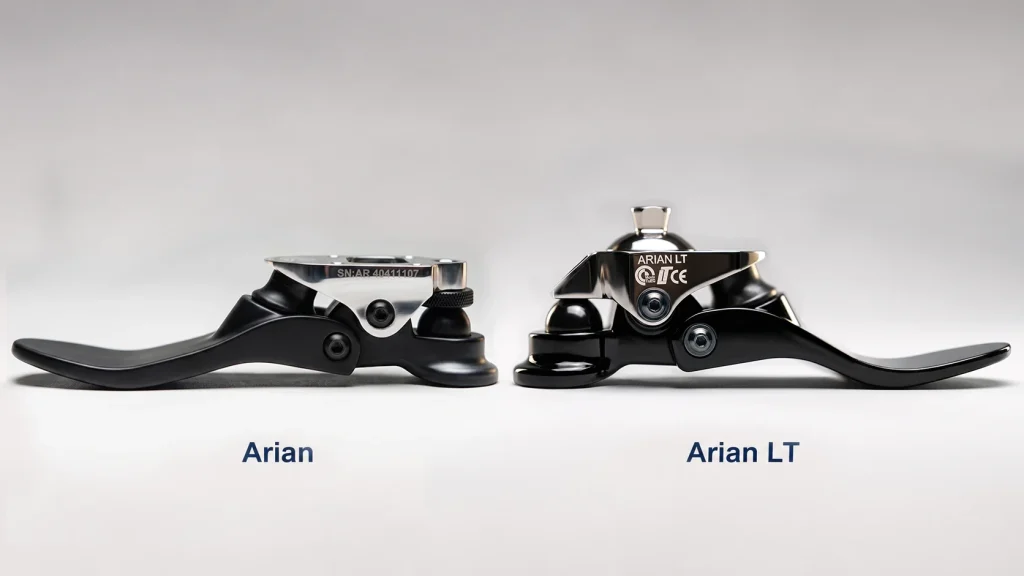
How does a replaceable bumper support continued useful life?
A bumper is a flexible component within the foot that influences its response to load and movement. At TGEC, both Arian and Arian LT have replaceable bumpers. If servicing the bumper is sufficient, that component can be replaced while sound parts of the foot are retained.
For example, a professional inspection may find that the bumper needs replacement while the structure and other components remain suitable. In that situation, servicing one component may provide a way to continue using the existing foot. This illustrates how the design can be used; it is not a promise that every type of damage can be repaired. Replacing a bumper does not reset the usage history of the other components.
Arian and Arian LT bumpers are available in different stiffness ranges so a specialist can match a compatible option to your weight, actual activity and the foot's specifications. That selection can be reviewed as your needs change. Arian also allows rear-bumper pressure adjustment. Arian LT does not have that same pressure adjustment, but its bumper is also replaceable.
A cost-effective foot is not necessarily the cheapest foot
A cost-effective foot is not necessarily the cheapest foot: the purchase price, serviceability and the cost of continued use should be considered together.
For someone who relies on a prosthesis every day, the question is not only, 'How much will I pay today?' Another important question is, 'What options will I have if a component needs attention later?' A replaceable bumper makes it possible, when servicing is appropriate, to consider the cost of work on that component instead of purchasing a complete foot.
At TGEC, this is how we explain the long-term value of Arian and Arian LT: retaining sound parts, being able to select a suitable bumper, and having after-sales service coverage alongside the initial price. Any saving depends on the individual's problem, the component and the services required. Ask your provider for an estimate for your own case so you can make a meaningful comparison. A lower purchase price alone does not make a foot the least costly option over its period of use.
Matching the foot to your real everyday needs
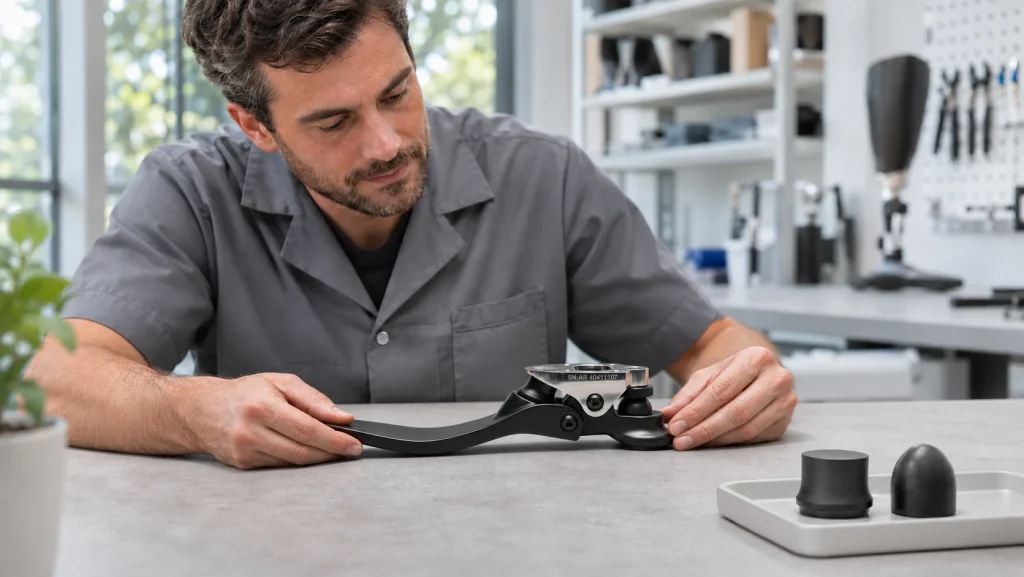
Tell your provider if your weight, type of work or amount of walking has changed. These changes may affect the fit and function of the whole prosthesis and may require another assessment. [1]
A stiffer bumper or a higher stated activity level does not necessarily mean a better foot. The aim is to match the foot's response to your actual needs. Replacing a bumper does not itself increase the maximum permitted user weight or automatically change the foot's technical category. Component selection and adjustment should be guided by your specialist and the instructions for that model.
What can you do to maintain the foot's performance?
Ask your prosthetic provider for a review schedule and keep your service records. If you notice a new, unusual noise, a fracture or a worrying change in how the prosthesis functions, stop using it and contact your provider. Do not keep walking to test the problem. Do not loosen or adjust the screws or bumper yourself. [1] [2]
At your appointment, ask the specialist to explain which component is causing the problem, whether component servicing is sufficient and what follow-up review is needed. Discomfort while walking does not always originate in the foot: the socket and the alignment of the whole prosthesis should also be checked. [3]
Frequently asked questions
How long are the Arian and Arian LT warranties?
Arian has a three-year warranty and Arian LT has a one-year warranty. Both models have ten years of after-sales service coverage. Obtain the details of eligible coverage and the current terms when purchasing.
Does ten years of service coverage mean the foot will definitely last ten years?
No. This is the period of after-sales service coverage. Continued use of an individual foot depends on its technical condition, conditions of use and a specialist's assessment. Ten-year service coverage is not a guaranteed ten-year lifespan.
Do I need to replace the foot when its warranty ends?
The end of the warranty is not, by itself, a reason for replacement. A specialist should assess the foot's condition and its suitability for your current needs. Continued use, servicing or replacement may be appropriate.
Why does serviceability matter when assessing value?
If servicing a replaceable component is sufficient, sound parts can be retained and the foot may remain in use. The cost of ownership should therefore take both the purchase and subsequent services into account, rather than only the lowest initial price.
Are all services free during those ten years?
Ten years of service coverage does not imply that every service is free. Before work begins, ask which issues fall under the warranty and request the cost of the required component and service under the current terms.
This article introduces Arian and Arian LT and helps you prepare for a discussion with your specialist. Foot selection, assessment of its condition and prosthetic adjustment require an individual evaluation.
Sources and further reading
[1] Leeds Teaching Hospitals NHS Trust — Skin management and general care advice for prosthetic users
Read more about prosthetic foot servicing and replaceable bumpers and carbon prosthetic foot pricing and complete prosthesis costs.