
You may be considering a prosthesis for everyday travel or returning to work and receive several different prices. Before comparing them, clarify one question: is the amount for the foot alone, or for the prosthetic assembly and its services? The price of a carbon prosthetic foot is only one part of the cost of a leg prosthesis. The socket, other components, and fabrication and fitting services may be charged separately or included in an overall quotation.
For Arian and Arian LT, request a current price together with the required model specifications and a list of included items. A figure in an old webpage or a short message, without those details, is not enough to support a decision today. This guide explains how to request a clear quotation and consider the purchase price alongside future needs.
How does a prosthetic foot differ from a complete prosthesis?
The foot is the component at the lower end of a prosthesis that makes contact with the ground during standing and walking. A complete prosthesis includes other components: the socket that holds the residual limb, a suspension system, connectors, and a pylon where needed. An above-knee prosthesis also includes a prosthetic knee joint. The exact combination of components is determined for each person. [1]
Two quotations described simply as a “carbon prosthesis” may therefore cover very different assemblies. One may include only the foot, while another includes socket fabrication, components, and services. Ask the provider to list each component by name and specification. The word “carbon” alone does not fully describe what you are buying.
Consider costs in three parts
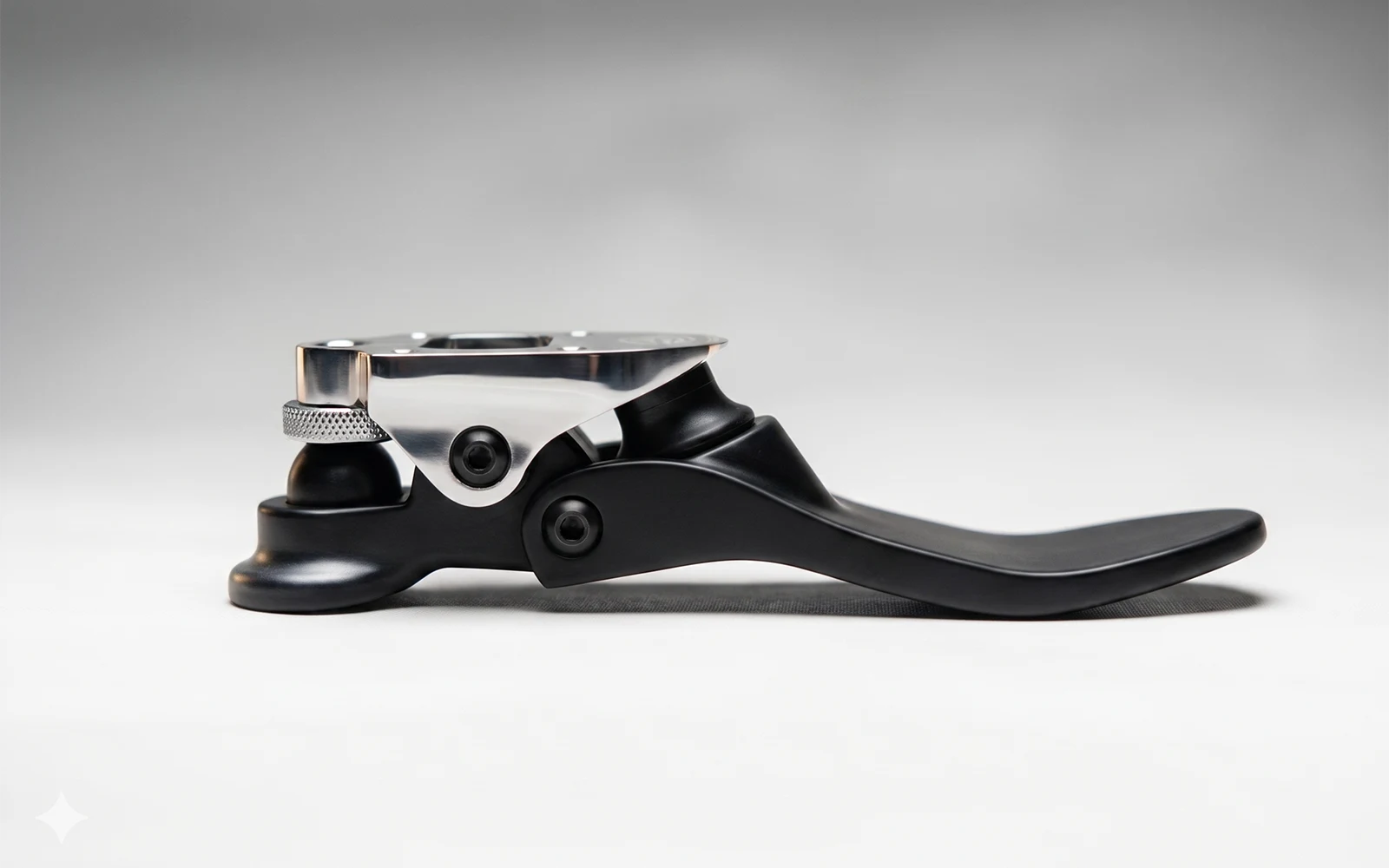
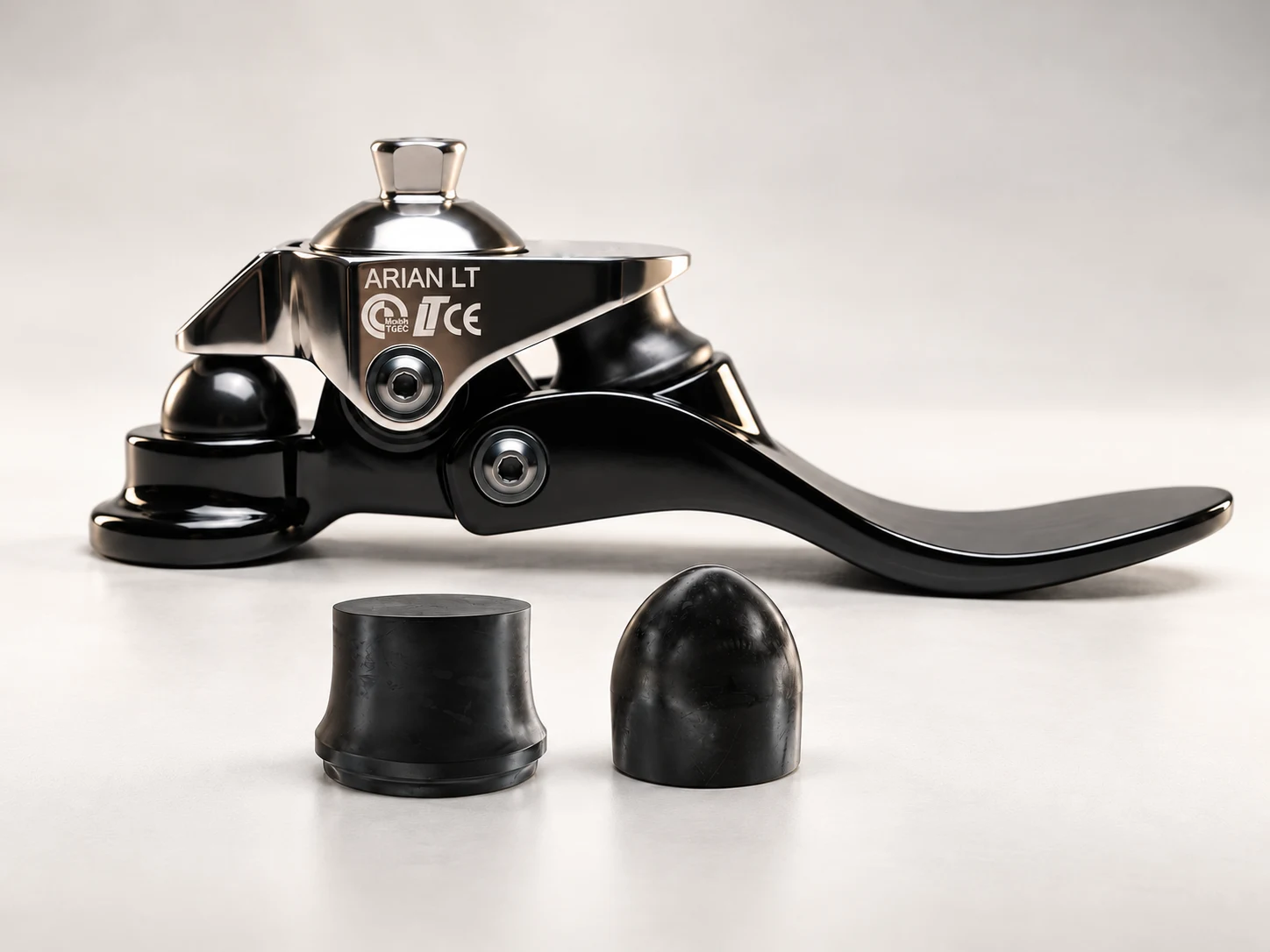
The foot and included items: clarify the model name, size, and required specifications. Ask whether the cosmetic foot shell, connector, or any other item shown in a product image is included in the quotation or charged separately. A product photograph does not replace a list of the items supplied.
Other prosthetic components: if you need a complete prosthesis or a rebuild, the socket and other required components should be specified separately from the foot. When replacing the foot on an existing prosthesis, a specialist also needs to assess the compatibility and condition of the remaining components. Do not assume in advance that all of them can be reused.
Professional services: clarify who provides assessment, socket fabrication where needed, installation, prosthetic alignment, instruction, and follow-up appointments, and what they cost. During fitting, the socket fit, prosthetic height and alignment, and walking are assessed. Buying a component alone does not replace that stage. [2]
A provider may bundle some services into one price. Each service does not necessarily need a separate invoice, but you should know exactly what the quoted amount covers.
What makes differences in foot prices meaningful?
Carbon prosthetic feet do not all have the same design or features. When comparing them, ask your specialist how each model’s movement, adjustment options, and access to replacement components relate to your everyday life. Weight, foot size, amputation level, and actual activity matter when selecting a foot. A higher price alone does not show that a foot is more suitable for you. [3]
When considering an Iranian-made carbon prosthetic foot, compare more than the manufacturer’s name or the price. Clarify the model specifications, permitted conditions of use, included items, and arrangements for future servicing. Ask where replacement components can be obtained and who is responsible for installing them.
One misconception is that reporting a higher activity level will lead to a better foot. The aim is to select a foot suited to your actual activity. Greater stiffness or a higher category is not a quality score. Explain how much you walk, your route to work, and the activities you actually do, and describe future goals separately.
How do replaceable bumpers relate to future costs?
At TGEC, we provide bumpers in different stiffness ranges for Arian and Arian LT so that a specialist can match the choice to the person’s weight, actual activity, and foot category within the permitted limits of that model. Both models have replaceable bumpers. This supports component servicing and reassessment of how well the foot’s response matches the person over time.
The benefit of this design is that, where appropriate, a specialist can replace a compatible bumper without needing to replace the entire foot solely to change the bumper. Whether servicing is sufficient in your case or another component needs replacing depends on an assessment of the assembly. Arian also offers rear bumper pressure adjustment. Arian LT does not have that pressure adjustment, but its bumper can still be selected and replaced.
To estimate future costs, ask separately about the component price, servicing labour, and how the part is supplied. A replaceable bumper does not mean free servicing or guaranteed savings for everyone. Replacing a bumper also does not authorise a higher weight limit or automatically change the foot category, and it must be carried out by a specialist.
Distinguish service life and warranty from servicing costs
The usable service life of a foot, the warranty period, and when a bumper needs replacing are three different matters. The end of a warranty does not by itself mean that a foot must be discarded. Having a warranty does not remove the need for checks or mean that every servicing cost is covered. The written terms for that product determine what is included.
For budgeting, ask about care, checks according to the product instructions, replaceable components, and appointment costs. Without current model information and details of use, a single lifespan or annual maintenance cost cannot be given for every foot. If the behaviour of the prosthesis has changed, report it to your specialist first. A repair or replacement decision is not made by comparing prices alone. [2]
What should you request to compare quotations?
Ask the seller or prosthetics clinic for a written quotation stating the model and product specifications, items supplied, included and separately charged services, warranty terms, and how long the price is valid. Also ask about delivery charges and component lead times. Then compare two quotations using those details, rather than only the final figure.
For current Arian and Arian LT prices, you can contact info@tgec-med.com or ask your prosthetist to submit the request to us. If the model specifications have not yet been determined, say so. At TGEC, we review the request and provide the relevant price and terms. The final choice of foot and its specifications is coordinated with the prosthetist’s assessment.
Frequently asked questions
Is the price of a carbon prosthetic foot the same as the price of a leg prosthesis?
No. The foot is one component of the assembly. The cost of a complete prosthesis may also include the socket, other components, and services. Ask for a description of what the quotation covers.
Why have I received two different prices for the same model?
First compare the specifications, included items, services, and validity dates of the two quotations. Commercial terms may also differ between purchasing channels. A price difference alone does not establish quality or suitability.
Is a more expensive foot better for everyday use?
Not necessarily. Its features need to match your needs and abilities, the prosthesis specifications, and the model’s permitted limits. Ask your specialist to explain how each difference would be relevant to your typical day.
Does replacing the bumper mean I will never need to replace the foot?
No. A replaceable bumper allows servicing and matching the response to the person, but the condition of the structure and other components also needs assessment. This feature does not guarantee unlimited life or that every type of damage can be repaired.
What information should I prepare for an accurate quotation?
Prepare the model name and specifications determined by your prosthetist, whether you need the foot alone or a complete prosthesis, and the services you require. If the selection has not yet been made, avoid guessing the size or category and ask for initial guidance.
This article is intended to make discussions about purchasing and costs clearer. Selecting and adjusting a prosthesis requires an individual assessment by a specialist.