
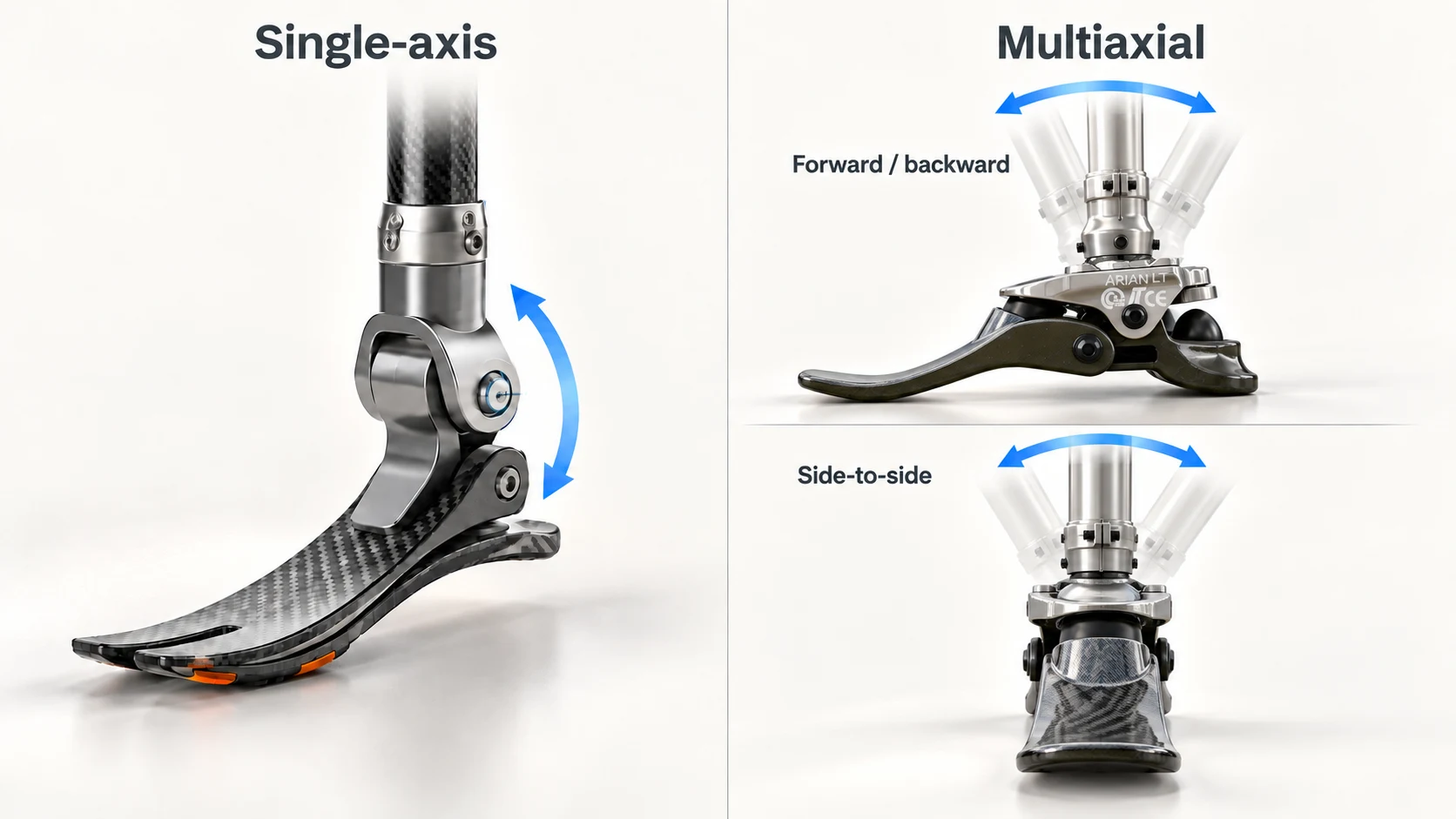
A single-axis prosthetic foot typically allows up-and-down ankle movement about one primary axis. A multiaxial prosthetic foot also accommodates movement or deformation in additional directions, such as inward and outward tilting. The difference concerns how the foot moves, rather than whether it is made from carbon fiber. [1], [2]
In everyday life, this distinction becomes relevant when you move from a level floor onto an uneven pavement, a ramp, or a surface that slopes sideways. Understanding the available movement can help you ask more useful questions when comparing models with your prosthetist.
For an introduction to the parts of a prosthesis and the questions to ask before choosing a foot, read our prosthetic foot guide.
What is a single-axis prosthetic foot?
A conventional single-axis foot has an articulated ankle that allows the foot to rotate mainly upward and downward. These movements are called dorsiflexion and plantarflexion. "Single-axis" does not mean that the foot moves in only one direction; upward and downward rotation occur about the same axis. [1]
For some users, the way a single-axis foot reaches full contact with the ground can be useful during weight acceptance. A clinical practice guideline recommends considering this design for people who walk at a single speed and need greater stability because of poor balance or weak knee extensors. This is a recommendation for particular needs, not a statement that one design suits everyone. [3]
What is a multiaxial prosthetic foot?
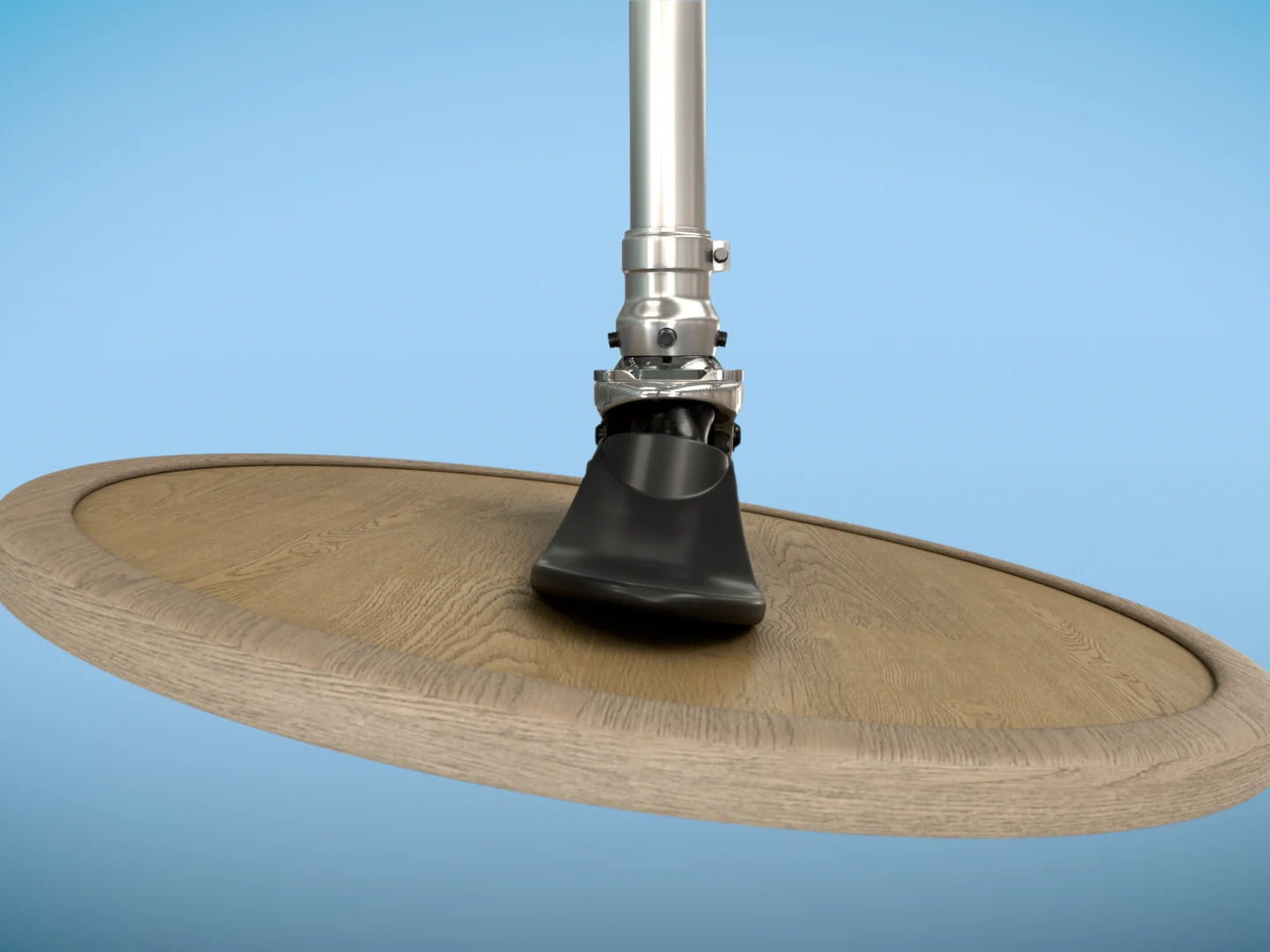
A multiaxial foot accommodates movement in more than one plane. Depending on its design, this can include inward and outward tilting as well as movement in the forward-and-back direction. These additional adaptations may come from joints, flexible structural components, or a combination of both. [2]
The amount of movement and the resistance to it are model-specific. Two feet described as multiaxial may respond differently to the same load or sideways slope. Mechanical research has shown that factors such as stiffness, split-toe construction, and an additional ankle joint affect how prosthetic feet adapt in the frontal plane. [2]
Single-axis and multiaxial feet compared
| Feature | Single-axis foot | Multiaxial foot |
|---|---|---|
| Movement | Primarily up-and-down ankle rotation | Adaptation in additional planes, potentially including inward and outward tilting |
| Main question to discuss | How does its behavior support weight acceptance and my walking pattern? | How does it accommodate the surfaces I encounter? |
| Adjustment and servicing | Depend on the specific model | Depend on the specific model |
| Suitability | Requires individual assessment | Requires individual assessment |
This comparison describes broad design differences. It does not establish that one category is lighter, less expensive, more comfortable, or more durable. Those questions require the specifications and assessment of the actual models being compared.
Where does carbon fiber fit into the comparison?
"Carbon" describes a material, while "single-axis" and "multiaxial" describe movement characteristics. A carbon-fiber prosthetic foot may use flexible components to provide adaptation in more than one plane. You therefore need to look beyond the material name and check what the particular design allows. [2]
Carbon construction also does not, by itself, mean that a foot is powered or electronically controlled. Material, directions of movement, and electronic control are separate features.
Does more movement mean better walking?
Not automatically. The appropriate amount of movement and resistance depends on the foot's design and the person using it. A feature that helps someone accommodate a particular surface may not address another person's main difficulty.
When comparing feet, describe the situation you find difficult: placing the heel on the ground, moving your body over the foot, walking on a sideways slope, or changing direction. Your prosthetist can relate this experience to the behavior of the foot and the rest of your prosthesis. Selection should reflect your abilities and needs, rather than the number of axes alone. [3]
What about energy storage and return?
Movement in several directions and energy return are different characteristics. In a passive energy-storing foot, a flexible component stores some of the energy applied during a step and releases part of it as the component returns toward its original shape. It does not have a motor adding new energy to the movement.
The amount of energy stored depends on the design, stiffness, loading, and orientation of the foot. Mechanical testing has demonstrated substantial variation across feet and loading conditions. [4]
Greater mechanical energy return is not, on its own, proof of lower fatigue or easier walking. In a study of an experimental foot, softer springs returned more energy, but the lowest metabolic energy expenditure occurred with a spring of intermediate stiffness. The study included amputee participants and non-amputee participants using prosthetic simulators; it does not establish the performance of TGEC products. [5]
How do adjustment and servicing affect the choice?
The directions in which a foot can move are not the same as the adjustments available to a clinician. Prosthetic alignment, component stiffness, and any model-specific bumper settings should be considered separately.
A bumper is a flexible component that influences resistance to movement in some designs. A replaceable bumper may be relevant to servicing, but its presence does not mean that every movement characteristic is adjustable.
Only a qualified specialist should make adjustments, following the manufacturer's instructions. Ask which components can be serviced, how replacements are supplied, and where you should go for follow-up care.
How these features apply to TGEC's Arian and Arian LT
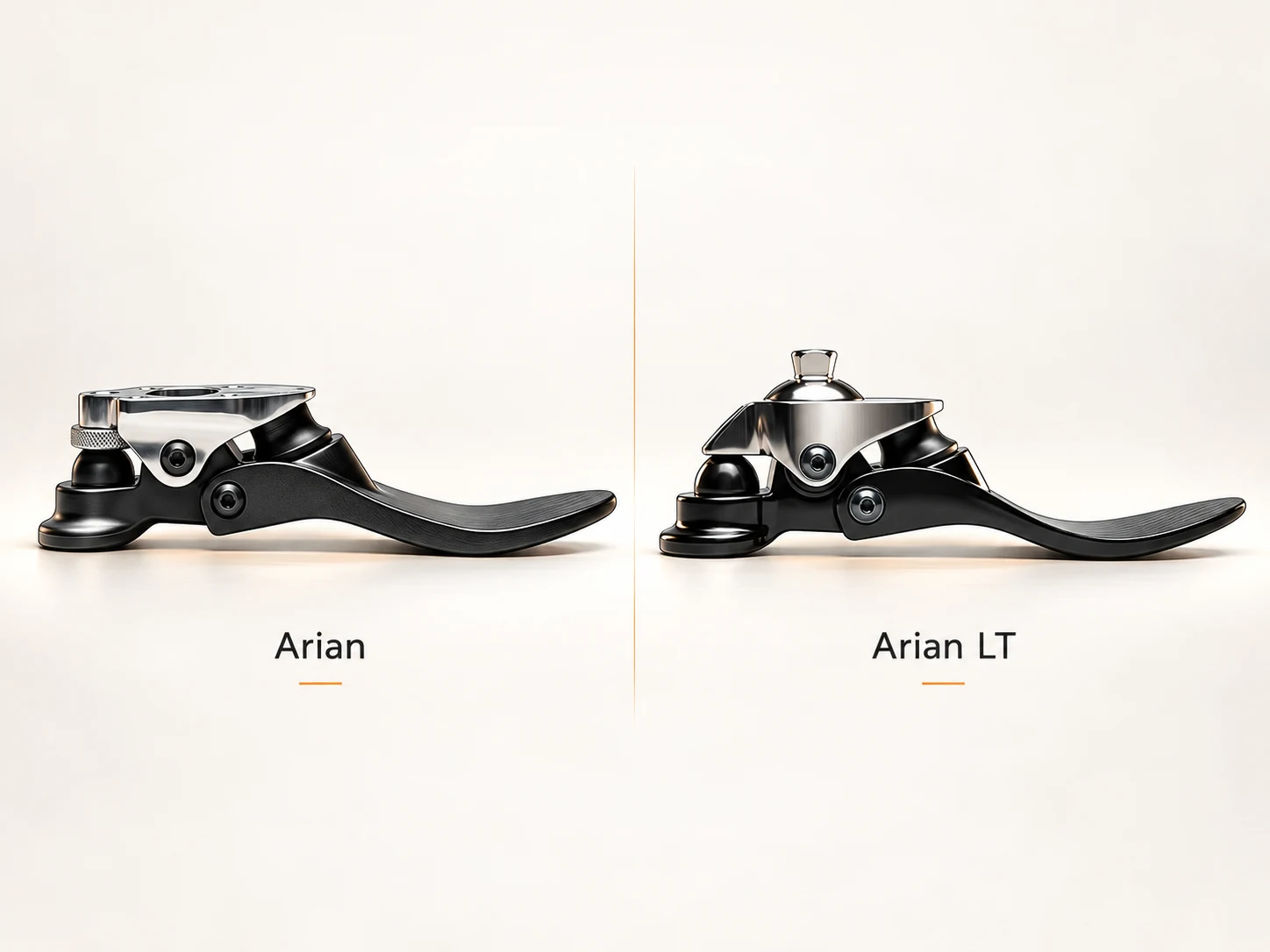
According to TGEC's supplied product description, Arian and Arian LT are carbon multiaxial prosthetic feet with replaceable bumpers and provision for servicing.
Arian provides adjustment at the pyramid connection and adjustment of rear bumper pressure. Arian LT does not offer these specific Arian adjustment options. This does not mean that the alignment of the complete prosthesis cannot be adjusted by a clinician.
Discuss the relevance of these features with your prosthetist. Research on other prosthetic feet explains general principles; it does not demonstrate clinical superiority, reduced fatigue, or faster walking with Arian or Arian LT.
Questions to ask when comparing two models
- Which movements does each model allow, and how are they relevant to my usual routes?
- How does each foot behave when my heel contacts the ground and as my body moves over the foot?
- Which features can be adjusted, and which are fixed by the design?
- Is the model compatible with my weight, activity level, available build height, and the other components of my prosthesis?
- If a foot feels too stiff or too soft, what should be assessed before a component is changed?
- What servicing, replacement components, and follow-up support are available?
Frequently asked questions
Is a multiaxial foot always better than a single-axis foot?
No. Additional movement may be useful for certain needs, but the choice should follow an individual assessment. The foot must work appropriately with your abilities, walking pattern, and the rest of your prosthesis. [3]
Is every carbon prosthetic foot multiaxial?
The word "carbon" alone does not establish the directions of movement. Check the structure and specifications of the model. [2]
Does multiaxial mean powered or electronically controlled?
No. Multiaxial adaptation can be achieved through mechanical joints or flexible components. Electronic control is a separate feature.
Can changing a bumper turn one foot into a different model?
An approved replacement component may change part of the behavior within that model's design limits. It does not change the foot's basic material or structural design. Replacement and adjustment should follow the manufacturer's instructions and be performed by a specialist.
This article is intended to help you understand prosthetic-foot designs and prepare for a discussion with your specialist. Selecting and adjusting a prosthetic foot requires an individual assessment.